 Villages Mobility Scooter Repair
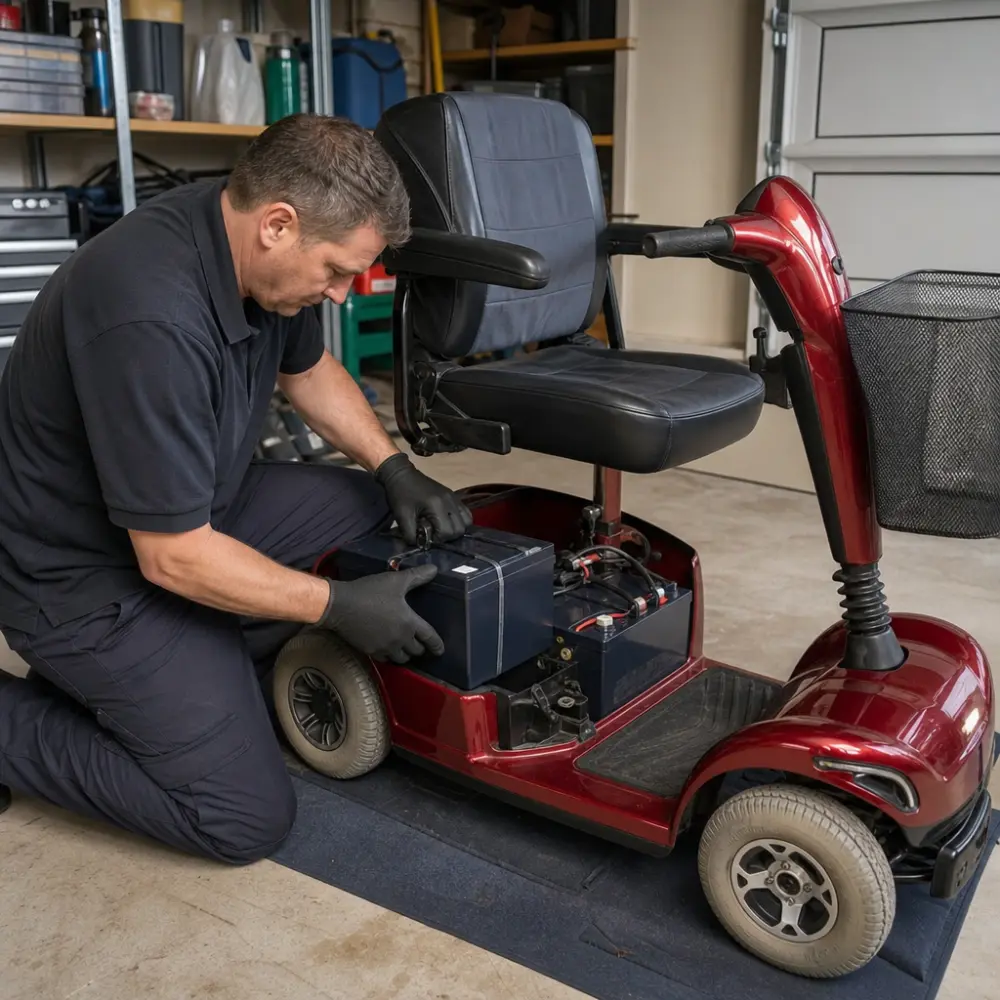
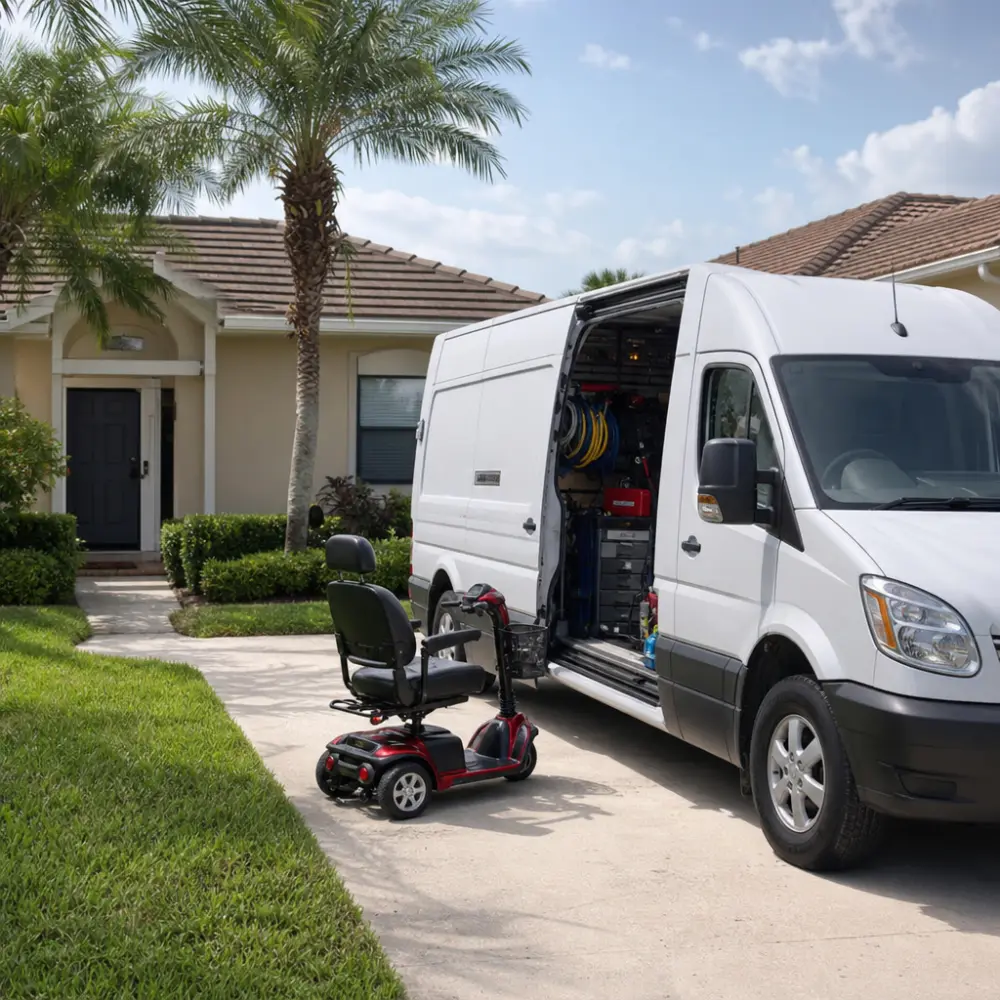
Villages Mobility Scooter Repair comes to your home anywhere in The Villages and the surrounding towns and fixes your mobility scooter or power wheelchair on-site: batteries, chargers, tires, motors, brakes, controllers, and error codes. The $75 to $150 home visit covers travel and the on-site diagnostic, and it is usually applied toward your repair if you approve the work. A sealed lead-acid battery pair or pack installed typically runs $150 to $450, a charger repair $80 to $250, tires $40 to $150 each, and motor, brake, or transaxle work $250 to $900. Describe what the scooter or chair is doing, and we usually arrive already knowing what to test first.
For a lot of households in The Villages, this is not a spare vehicle sitting in a garage. It is the only way someone gets to the grocery store, the pharmacy, the pool, or a doctor’s appointment in Brownwood. The Villages is one of the most heavily retiree-concentrated communities in the country: the 2020 census put the median age at 73.2, with 84.7 percent of residents 65 or older, spread across a community that stretches over Sumter, Marion, and Lake counties. When the scooter or the power chair will not start, the person it belongs to is often stuck at home until it does. That is the whole reason we do at-home repair, finished in one visit where the part allows, rather than a shop drop-off and a wait.
What gets fixed at your home
- Mobility scooter repair: the core call. On-site diagnosis of whatever is wrong, won’t start, won’t charge, runs slow, makes a noise, and repair in the same visit whenever we have the part along.
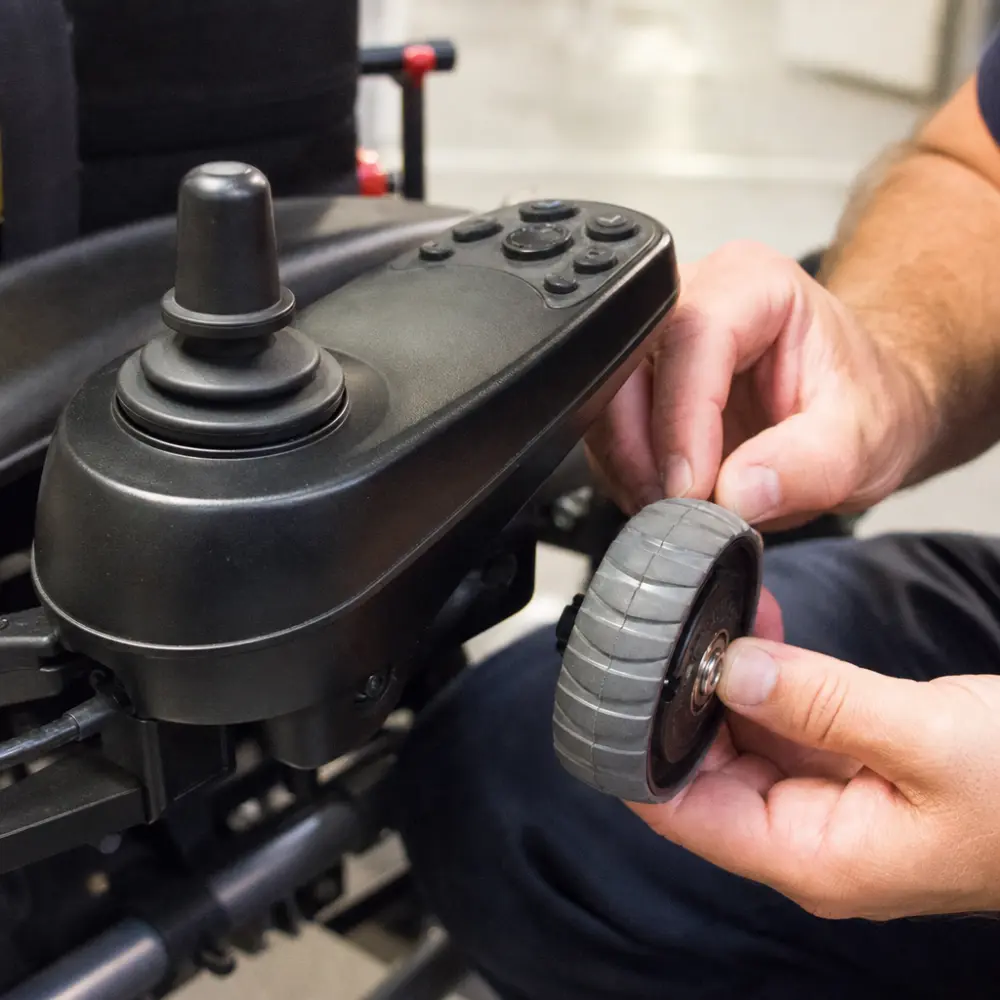
- Power wheelchair repair: the same on-site diagnosis and repair for mid-wheel and rear-wheel drive power chairs, including joystick, controller, and drive-wheel faults.
- Battery replacement: new sealed lead-acid packs installed with old-core haul-away, plus honest lead-acid versus lithium math for a scooter or chair used every day.
- Charger and electrical repair: a scooter that “won’t take a charge” is very often the charger or the charge port, not the battery, so insist on a test before anyone sells you a pack.
- Tire and wheel replacement: flat, cracked, or worn tires replaced on-site, including flat-free and solid options for anyone tired of a flat stranding them.
- Motor, brake, and transaxle repair: the drive-side faults that show up as clicking with no movement, weak power, or a chair pulling to one side.
- Controller and error-code diagnosis: beeping, flashing lights, or a dead dashboard, read against the actual manufacturer’s fault-code chart for your model.
- Preventive maintenance and tune-up: the annual visit that catches a weak battery or a corroded terminal before it strands you.
- Scooter lift and carrier service: diagnosis and repair of the hitch-mounted lift that gets the scooter into the car in the first place.
Full ranges for every job are on the pricing page. They are published here because most mobility repair outfits make you call for a number, and “affordable” only means something when you can check it yourself first.
Why repair comes to you instead of the other way around
A scooter or a power chair that will not run is not something most people can lift into a trunk, and a folding travel scooter that a spouse can just barely manage is still a bad way to start a repair. Loading a broken mobility device into a vehicle, driving it to a shop, and waiting days for a callback defeats the purpose of the device in the first place. Mobile repair works the other way: you describe the symptom, we bring the likely parts, and in most cases the repair happens at your kitchen table or your garage in one visit.
Batteries fail on a predictable clock, and Florida heat and humidity are hard on them. Sealed lead-acid batteries typically hold up for a few years of daily use before capacity drops off, and a garage that runs hot most of the year accelerates that. A scooter that “just won’t hold a charge like it used to” is usually the battery pack telling you it is done, and the honest fix is a load test on each battery rather than a guess.
A code on the dashboard is a real diagnostic tool, if you read it correctly. Pride’s Go-Go scooters and Jazzy power chairs both use flash or beep counts to point at a specific fault, and the meaning is different by model and controller. Guessing from a beep count you read online for a different scooter wastes money. The code has to be read for the actual model in the room.
Most “dead” scooters are not actually dead. Clicking but not moving is very often a solenoid, not a motor. A charger that will not light up is very often a connector, not the whole charger. We test the cheap, likely part first and say honestly when a fix is not worth it against the value of an older scooter.
How a home visit works
- Describe the symptom. Won’t turn on, beeping or flashing, won’t charge, pulling to one side, clicking with no movement, a flat tire. A clear description narrows the likely part before we arrive.
- We come to you. Anywhere in The Villages, Leesburg, Lady Lake, Wildwood, Fruitland Park, Summerfield, Oxford, or Tavares, at a scheduled window. The $75 to $150 visit fee includes the diagnostic and is usually applied to the repair; confirm that when you book.
- Diagnosis before any recommendation. A load test on each battery, a voltage check across the pack, a charger output test, and a check of the controller, brakes, and tires, so you get the actual fault instead of the most expensive guess.
- A firm number on the spot, then the fix. Battery sets, chargers, solenoids, tires, and common controller parts are parts we commonly carry, so many jobs close in the same visit once you approve the number.
- A clean finish. Expect a function test in front of you, terminals protected, and the old battery taken away for recycling.
An honest word on Medicare and insurance
Medicare Part B does cover mobility scooters and power wheelchairs when a doctor orders one as medically necessary, and it covers repairs to equipment you own when the repair is needed to keep it working, subject to the beneficiary’s usual 20 percent coinsurance after the Part B deductible. But Medicare pays for DME and DME repairs only through suppliers enrolled in Medicare, and we are not a Medicare-enrolled durable medical equipment supplier. If your scooter or chair came through Medicare and is still within its expected useful lifetime, call the DME supplier who provided it first; they may be the right party to handle a covered repair. We are the private-pay option: for a scooter or chair you bought outright, one that is out of warranty, or anyone who just wants a fast, direct repair without going through a supplier. The full picture, sourced from Medicare’s own rules, is on the pricing page.
Straight answers, published prices
Two things we will not do. We will not pretend to be something we are not: we are independent, not an authorized dealer or warranty center for Pride Mobility, EV Rider, Merits Health, or any other manufacturer, and not a Medicare DME supplier. And we will not steer you toward parts you do not need: a scooter that “won’t charge” should get a charger and connector test before anyone talks about a battery pack, and if a repair does not make sense against the value of an older scooter, you deserve to hear that too. Ask us, or anyone you hire, which license or training they hold and for proof of insurance, the same as you would ask any mobile repair service. More on how we work is on the about page, and the FAQ covers the most common questions.
Get a fast quote
A scooter or power wheelchair that will not leave the garage is exactly the call we were built for. Send the brand, the model if you know it, and what it is doing; a photo of the battery compartment or the dashboard helps. We will come back with a price and a visit window anywhere in The Villages and the surrounding tri-county area.